Circular Valley’s Carsten Gerhardt: Turning Circular Innovation into Europe’s Industrial Advantage
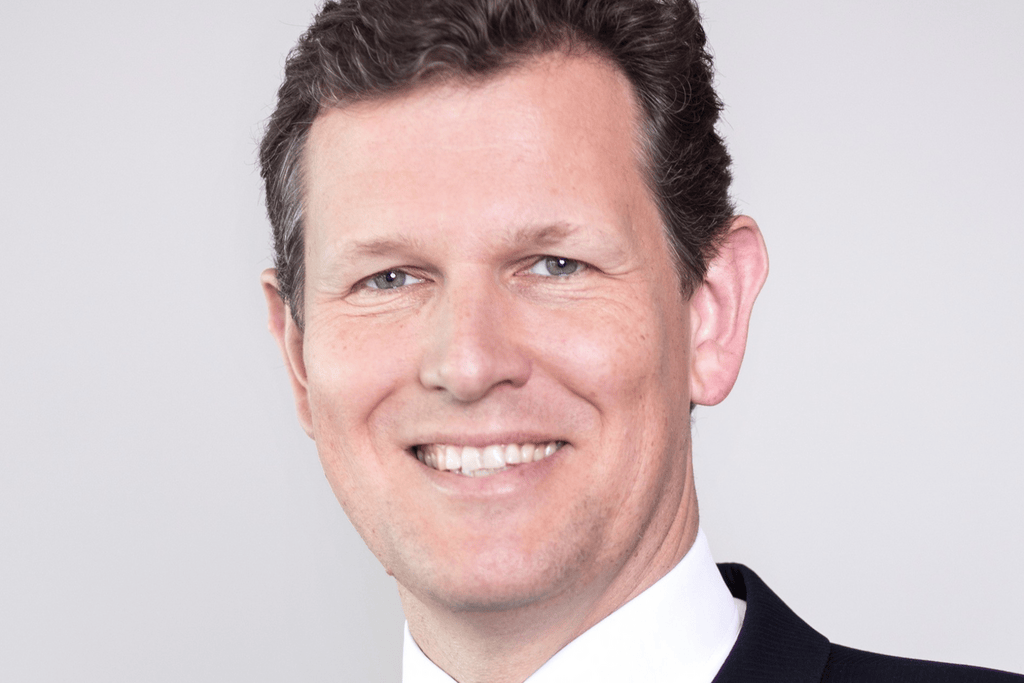
Can Europe turn its industrial base into a launchpad for the circular economy? Carsten Gerhard, Chairman of the Circular Valley Foundation, believes it can.
As Europe seeks to strengthen industrial competitiveness and reduce reliance on imported raw materials, circular innovation is becoming an economic priority. From bio-based alternatives to turning industrial waste into valuable feedstocks, the challenge is bringing solutions to commercial scale. Ahead of Tech Tour Bio-based Industries 2026, taking place on 12-13 Nov in Wuppertal within Circular Valley® Forum, we speak with our host partner about the opportunities for startups and the capital, customers and partnerships needed to turn circular technologies into scalable businesses.
TT: What is the long-term vision behind Circular Valley, and why is this the right moment for Europe to invest in circular innovation?
CG: Our long-term ambition is quite simple: Circular Valley shall become for the circular economy what Silicon Valley became for the digital economy: a place where the best ideas, technologies, companies and people come together and innovations can scale.
And the timing could hardly be better. Europe is facing massively increasing pressure on its industrial competitiveness while at the same time trying to reduce dependencies on imported raw materials and vulnerable supply chains. A circular economy allows us to keep materials in productive use, lower those dependencies and create more value locally.
So, for Europe, circularity is no longer primarily an environmental agenda. It is becoming an industrial and economic strategy. If we get it right, we can strengthen European competitiveness and resilience while helping to address environmental challenges at the same time.
TT: Where do you see the greatest opportunities for startups or scaleups to make a global impact?
CG: The biggest opportunities are where large material flows meet large unresolved industrial problems.
Think about plastics and chemicals, metals, batteries, construction materials, bio-based carbon or new approaches to repair, reuse, remanufacturing and recycling. Circular Valley’s work already spans areas such as battery recycling, chemical recycling, bioeconomy, urban mining, alternative construction materials, reusable packaging and circular cars.
But technology alone is not enough. The real opportunity for a startup is to turn an invention into a scalable business model and connect it to industrial value chains. That is particularly important in circularity because one company’s waste or by-product often has to become another company’s raw material.
For Europe, there is an additional opportunity: we have a large industrial base and therefore an enormous potential laboratory for circular solutions. If startups can demonstrate that their solutions work with demanding industrial customers here, the potential market is global.
TT: How does Circular Valley help turn connections into real-world innovation and commercial success?
CG: This is really at the heart of Circular Valley. We do not want networking for the sake of networking. We bring together the actors who are actually needed to close a loop.
Through our accelerator, companies come into direct contact with innovative startups; Circular Valley supports entrepreneurs in turning inventions into innovations with viable business models and ultimately scaling those ideas.
That approach is already being applied to concrete industrial challenges. For example, Circular Valley’s battery and chemicals working groups bring together companies, research organizations and public-sector partners across North Rhine-Westphalia, Flanders and the Netherlands to identify value-chain gaps and develop joint projects.
Our role is therefore to reduce the distance between an idea and its industrial application: connect the entrepreneur with the customer, the scientist with the manufacturer, the investor with the scaleup, and industry with policymakers.
TT: What makes the Circular Valley Forum unique, and why should startups and investors be part of it?
CG: What makes the Circular Valley Forum special is the combination of people who normally meet at different conferences: industrial decision-makers, startups, investors, scientists and policymakers come together around the same circular-economy challenges.
The Forum is not isolated from Circular Valley’s other activities. It sits within a wider ecosystem of accelerator programs, industrial partnerships, cooperation projects and policy dialogue.
The investment dimension adds something particularly valuable. Circular Valley’s previous cooperation with Tech Tour has explicitly connected entrepreneurs, investors, corporates and governmental partners, including cooperation around bioeconomy.
For startups, that means access not just to capital, but to industrial customers, partners and expertise that can help them scale. For investors, it means access to technologies and entrepreneurs addressing some of the largest industrial transformation challenges ahead.
And that is ultimately what makes the Forum different: it is not only about discussing the circular economy. It is about bringing together the people who can actually build it.
___
Scaling the bioeconomy takes capital, customers and industrial partnerships. These connections will be at the heart of Tech Tour Bio-based Industries 2026, taking place on 12–13 November in Wuppertal, within the Circular Valley® Forum. With 40 selected companies, 45+ seasoned investors and 100+ One2One meetings, the programme brings together the people and expertise needed to move bio-based innovation forward. You can still join us by registering here.
Stay in the loop – sign up for our newsletter below!
Newsletter
Stay up to date with market insights, trailblazing investment cases, and leadership profiles by subscribing to our newsletter.