Backing the Quantum Leap: Søren Hein on Industrialising Quantum Computing at IQM
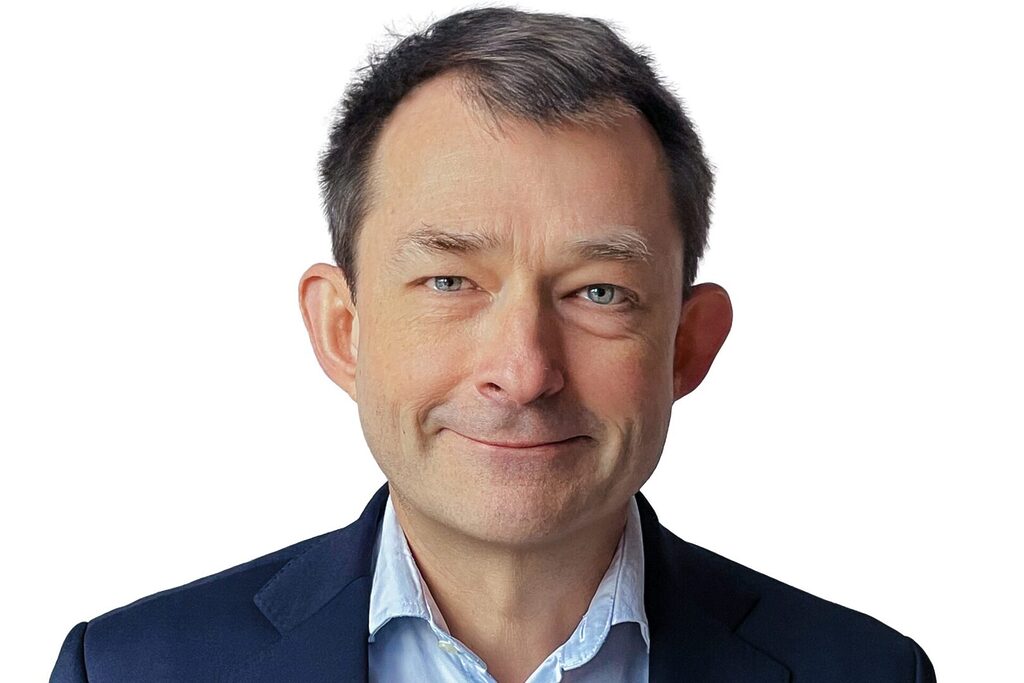
When Søren Hein first backed IQM Finland Oy (IQM Quantum Computers) as a venture partner at MIG Capital, quantum computing was still largely a promise. Today, as COO and Deputy CEO of one of Europe’s fastest-growing deep-tech companies, he is helping turn that promise into industrial reality.
A long-standing member of the Tech Tour community and a Growth Award Winner at the 2022 Tech Tour Growth50 Europe Summit, IQM Quantum Computers has become a flagship example of what European ambition, talent, and patient capital can achieve together. With more than $600M raised, 21 quantum systems sold, and customers all across the globe, the company builds and delivers full-stack quantum computers that customers own and operate — more deployed systems than any other manufacturer in the world.
In this conversation, Søren shares lessons from his journey across boardrooms and venture investments into operational leadership, why IQM is positioned to scale now, and what Europe’s founders can learn from a company building the future of computing from the ground up.
TT: You’ve seen many deep-tech companies from the investor and board side. What convinced you that IQM Quantum Computers is one of the few quantum companies ready to scale globally right now?
SH: I was with MIG Capital in 2019, when we made the initial seed investment [into IQM]. My colleague Axel Thierauf and I were championing the deal, and of course it was a visionary investment at the time. We did the best diligence we could and I think, in retrospect, we were very pleased. There were some details in the business plan that were modified subsequently, but IQM always wanted to be a full-stack quantum provider, and I think we got the big picture right.
TT: Quantum is moving from research to real-world use. From your perspective as an investor at MIG Capital, what matters most today when judging whether a quantum company is truly creating value?
SH: We can divide quantum companies into full-stack and more specialised companies. Within the full-stack category, there is some selection going on, and as a result of the continuous funding needs of all these companies, none of them are profitable yet. And I think what has really helped IQM through this period is the focus on commercial success. IQM is the commercial leader in terms of systems sold globally. I think that has fed a virtuous cycle, where we’ve been able to raise the money and then create the results, and to hire the people for the next scaling, so to speak.
Within full-stack, a number of companies are now achieving the large rounds, and some are not, or at least have not yet. So within full-stack, it is important to really be able to deliver certain things that customers value today, within the more specific part of the value chain. The challenge is sometimes for those companies that may have identified one important component – which can be quite different from customer to customer, and there aren’t that many customers yet – so the real challenge is to come up with something generic enough that can be sold to a number of people and generate revenue already today. Many of those companies are accomplishing that, and are therefore also achieving the funding that they need. But a targeted company has to pick its battles.
TT: IQM is building and delivering real machines, not just research prototypes. What are the toughest challenges in turning cutting-edge quantum technology into a reliable commercial product?
SH: IQM is focusing on one specific modality, one specific way of making quantum computers, called “superconducting qubits”. That is also the technology chosen by some of our competitors. But of course there are other modalities as well: trapped ions, photons, spin qubits, and so forth. Within superconducting qubits, it really is a matter of industrialising and scaling technologies, rather than inventing new physics.
Therefore, it is increasingly becoming also an industrialisation and manufacturing challenge. IQM was early to the game, building our own fabrication facility and assembly line in Finland. This enables IQM to have faster innovation cycles, where we can try out our designs in our own manufacturing facility.
The other thing is that “the stack,” as we call it – all the technologies that fit together into a complete quantum computer – is/are becoming quite heterogeneous. It is no longer a single piece of silicon at the bottom of the stack and quantum processor; it is becoming chiplets or tiles, so multiple chips that have to be connected coherently. That introduces new challenges in manufacturing as well. So increasingly it is becoming about 3D integration, and also about cost and efficiency – not just on the chip level, but across the whole stack, electronics, cabling and so forth. In that sense, it is becoming an engineering challenge, at the same time as it is a physics challenge.
TT: Where do you see this technology going 20 years from now?
SH: I think 20 years from now it will be a very well-established technology that has its role in the computing landscape. I think by then also the algorithms will be much further advanced and new algorithms that are very suitable for quantum computing will have been discovered.
That is happening as we speak, but I think when the technology becomes more ubiquitous, it also becomes accessible to a number of people and industries. At the moment, it’s researchers and early groups within industrial players who are looking at it, but that is always the case [for new technologies]. Also, we see it in open source. When you have enough people applying their intellect to something, then great things happen that we probably cannot predict today.
TT: Europe is strong in science but often weaker at scaling companies. What has IQM done differently, and what should European founders learn from that?
SH: I think the early commitment to selling complete products was absolutely right and has also fed into this virtuous cycle that I talked about earlier, which I have also seen as a venture investor for many years. The other thing is that IQM had the ambition from the beginning, [whereas] I think some venture companies perhaps set themselves more gradual targets and are more concerned about meeting those, rather than going for the big success. In a field like quantum computing, it is certainly not a winner-take-all, but it is a field where there is an enormous pressure to be at the forefront – and IQM always had that mindset. As a result, IQM was also able to hire many of the best people, and has been able to build on that.
So it is really about how this mindset inspires both the funding, the hiring and the execution. I think you have to decide, as a company, are you going to run some significant risk, but go for the big prize? Or are you aiming for an attractive return for your investors, and perhaps also managing the risk a little bit more? IQM has always had the ambition and the fearlessness, and that is also what we see in many U.S. companies.
TT: As IQM enters its next phase of global growth, what operational priorities made this the right moment for you to step in as COO and Deputy CEO — and what do you see as your most important focus in the role?
SH: While I was on the board of IQM, I already focused on technology and operations, and in that sense it was actually a natural continuation. So, after my initial surprise, I was very pleased when I was asked to join in that capacity, and now I’m able to focus fully on it. I have background in semiconductors and operations, also from being on the board of many companies.
What we talked about earlier – the scaling, the execution, the partnerships – is exactly what IQM needs at this point. Even a company with 350 people, and growing rapidly, still needs to leverage all the other technologies out there. And even though the revenue potential is enormous at the moment, the volume is still aspirational. As a result, we need to find partners with the same mindset as ours, who want to be big winners in this race.
I’m hopeful that, also with my industry background, I can contribute to that. I think it also just shows my passion about this company. I had a life as a board member and a venture investor — and in the end IQM excited me so much, that I made this transition. I feel like the team is just incredible, and I can contribute to our industrialisation and our professionalisation as a company, going forward. So this is definitely what I wanted to do at this stage.
___
At Tech Tour, we are privileged to have within our community inspiring leaders like Søren Hein, whose perspective underscores our shared conviction: Europe’s deep-tech champions are here to scale.
IQM’s journey reminds us that building transformative technologies demands long-term partnerships between entrepreneurs, investors, corporates, and ecosystems like Tech Tour. As quantum computing moves from research to real-world impact, we are proud to stand alongside innovators shaping Europe’s future global tech leaders. To celebrate the next generation of soonicorns, join us at Tech Tour Growth50 Europe in Paris this coming March 17th.
Stay tuned for more inspiring conversations — sign up for our newsletter below.
Newsletter
Stay up to date with market insights, trailblazing investment cases, and leadership profiles by subscribing to our newsletter.