Europe’s Bioeconomy at a Turning Point: BIC’s Philippe Mengal on Investment, Scale and Competitiveness
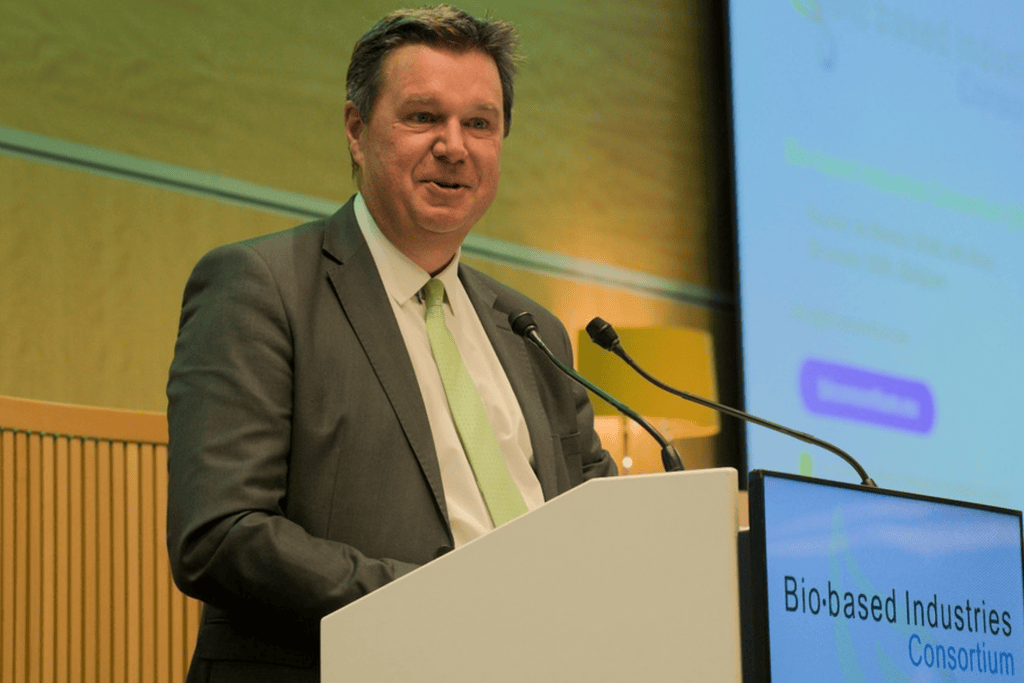
While Europe’s bioeconomy is moving rapidly up the strategic agenda, turning scientific excellence into industrial-scale businesses remains a critical challenge.
Ahead of Tech Tour Bio-based Industries 2026, taking place on 12–13 November in Wuppertal, Germany, we spoke with Philippe Mengal, Executive Director of the Bio-based Industries Consortium (BIC), a long-standing Host Partner of the programme.
Having taken the helm of BIC earlier this year, Mengal brings three decades of experience across bio-based industries, innovation and European policy. In this conversation, he discusses why the next five years will be decisive for Europe’s bioeconomy, what is needed to unlock more private investment and biomanufacturing capacity, and how bio-based industries can strengthen Europe’s competitiveness, resilience and strategic autonomy.
TT: You have taken on the leadership of BIC at a defining moment for Europe's industrial strategy. What is your top priority for strengthening Europe's bio-based industries over the next few years?
PM: Indeed, since last year the bioeconomy has significantly climbed the European agenda. With the revised Bioeconomy Strategy and its 2040 ambitions, the sector is no longer peripheral. It is central to Europe’s vision of sovereignty. This updated EU Bioeconomy Strategy provides a strong and honest diagnosis of the barriers to investment and market uptake.
Europe has clearly and ambitiously articulated where it wants to go by 2040. But intent is not enough. The current measures lack the boldness required to fully deliver this vision. The real challenge now is execution at scale and speed. In a global race, timing is everything, and today, Europe risks moving too cautiously.
If I had to select one top priority, it would be about continuity. Extending the Circular Bio-based Europe Joint Undertaking (CBE JU) is essential to bridge the first innovation “valley of death”, but also the second one. Europe has no shortage of high-quality, scalable projects, but too many fail to reach the market.
TT: Indeed, Europe has no shortage of scientific excellence, yet scaling bio-based innovation remains challenging. What needs to change to attract more private capital and accelerate commercial deployment?
PM: Europe must invest in biomanufacturing capacity. If we want to lead, we need to produce, not just innovate. Moving from demonstration to industrial production requires targeted financial instruments, stronger support for scaling, and the creation of real lead markets. Without demand-side measures, innovation alone will not translate into impact. So market pull mechanisms should be developed as proposed by the BIC taskforces on lead markets for bio-based products recently published. And in order to de-risk investment, the regulatory framework should also be simplified and stabilised, as predictability is key.
But I remain optimistic. Consumer demand is rising, technologies are maturing, and if we apply the lessons learned, focusing on scalable, market-driven solutions, the sector is well positioned for significant growth. However, the next five years will determine whether Europe leads the bioeconomy, or imports it.
TT: Europe is increasingly focused on competitiveness, resilience and strategic autonomy. What role will bio-based industries play in delivering all three?
PM: The bioeconomy is one of the few areas where Europe can turn vulnerability into strength.
Today’s geopolitical instability has exposed a simple truth: dependence is risk. The bioeconomy offers a pathway to reduce that risk by anchoring production in local, renewable resources. It allows Europe to move from extraction-based dependency to regeneration-based sovereignty.
Bio-based industries directly contribute to Europe’s strategic autonomy, by reducing dependence on fossil imports and critical raw materials. Bio-based industries enable a “Made in Europe” model, using our own resources, such as agriculture, forestry, and biowaste, to build resilient value chains.
There is solid evidence that Europe has sufficient sustainable biomass to support this transition, including the responsible use of first-generation feedstocks without compromising food security. Therefore, Europe already has the biomass, the knowledge, and the industrial capacity to build this model. The challenge is to mobilize it coherently and at scale.
At the same time, the global race is accelerating. Countries like Brazil and China are not just investing. They are building ecosystems designed for speed and scale. Europe must respond with the same level of strategic clarity. We risk losing ground if we do not act decisively.
TT: This November, BIC co-hosts Tech Tour Bio-based Industries 2026 at the Circular Valley Forum. What makes this gathering particularly valuable for startups, investors and industry leaders looking to shape the next generation of Europe's bioeconomy?
PM: BIC plays a central role in supporting businesses access to finance. That is why BIC is partner of the Tech Tour Bio-based Industries Programme for the fifth consecutive year, and the fact it takes place at the Circular Valley Forum enable to increase the visibility for our participating members. Tech Tour Bio-based Industries is an opportunity to raise our members visibility, build strategic relationships, and help shape the future of bio-based industries.
___
The challenge for Europe’s bioeconomy is increasingly clear: not simply to generate world-class innovation, but to finance, scale and industrialise it in Europe.
That challenge will be at the heart of Tech Tour Bio-based Industries 2026, co-hosted by BIC on 12–13 November in Wuppertal within the Circular Valley® Forum. The programme will bring together 40 selected companies, 45+ seasoned investors and 100+ One2One meetings, connecting emerging bio-based technologies with the capital, industrial expertise and partnerships needed to scale.
As Mengal puts it, the opportunity is there — but the coming years will determine whether Europe leads the global bioeconomy or increasingly imports it.
To stay connected on more exciting community news, sign up for our newsletter below!
Newsletter
Stay up to date with market insights, trailblazing investment cases, and leadership profiles by subscribing to our newsletter.